
The practice day · cl. 26(a)
Every file, from first enquiry to closure.
The record is built as you work, not written up afterwards. Status, next action and who is waiting sit on the file itself, so nothing depends on anyone remembering.
What a case holds
A case holds the client, the visa type, the stage, the deadlines, the documents and the correspondence as one record. It is assembled while the work happens rather than written up afterwards, so anyone picking the file up sees what was advised, what was agreed and what happens next, in order and with dates.
- Code clause
- cl. 26(a), the client file
- On one record
- Correspondence, documents, file notes, deadlines and the people involved
- On closure
- Checked against what clause 26 requires before the matter is archived
Everything a matter needs, on the matter.
The record builds as you work
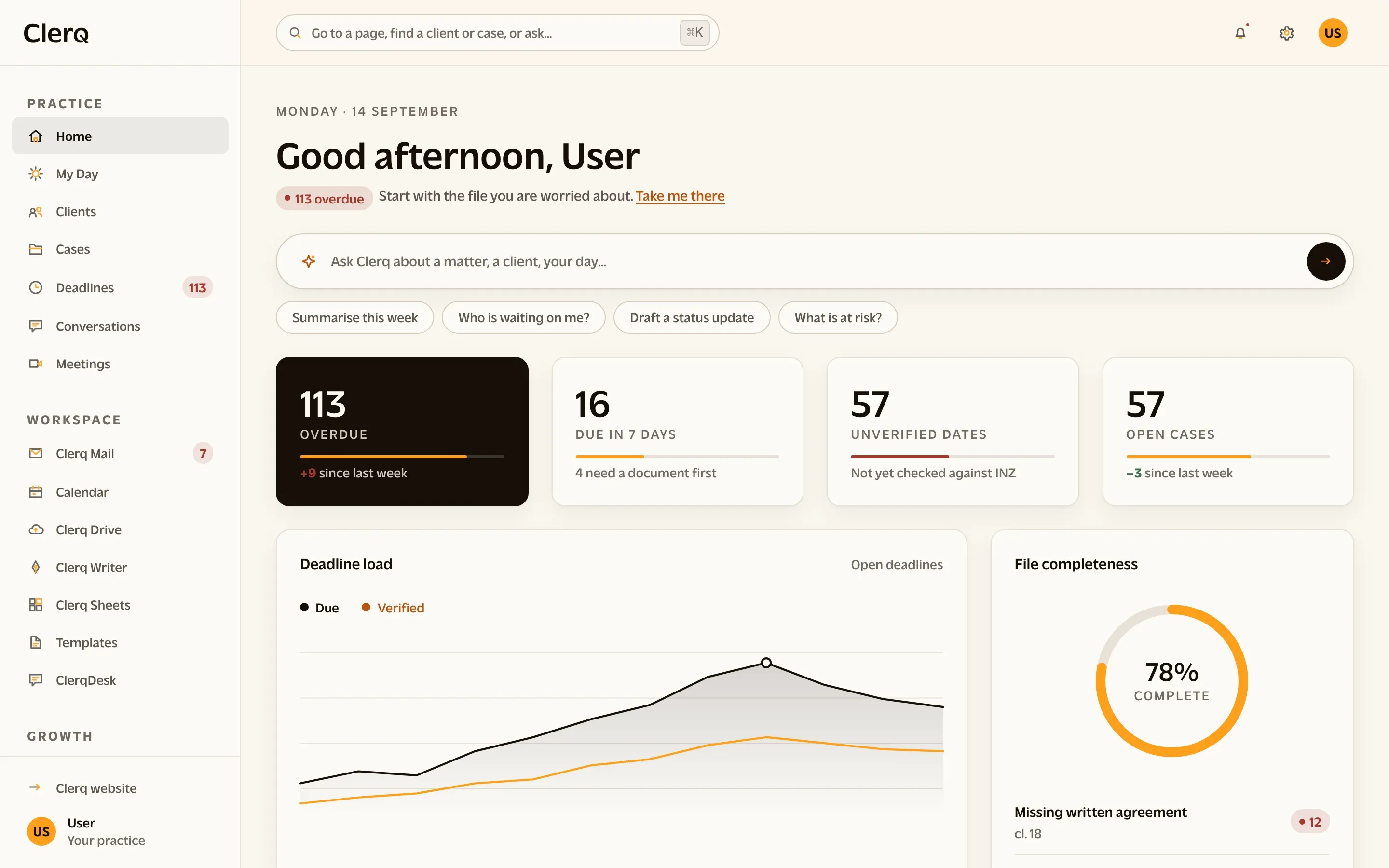
cl. 26(a)Status, next action and who is waiting sit on the file itself. Nothing depends on anyone remembering to write it up later, because there is no later.
One matter, one place
cl. 26 and 27Correspondence, documents, file notes, deadlines and the people involved are the same record, not five systems that have to be kept in step.
Handover without archaeology
cl. 18Anyone picking the file up sees what was advised, what was agreed and what happens next, in order, with dates.
Closure that actually closes
cl. 27The file is checked for what the Code requires before it is archived, so a closed matter is a complete one.
More in The practice day
Start with the file you are worried about.
We onboard one practice at a time, so the first conversation is a working one: your overdue dates, the documents you are still chasing, and what the system would have done about them.